
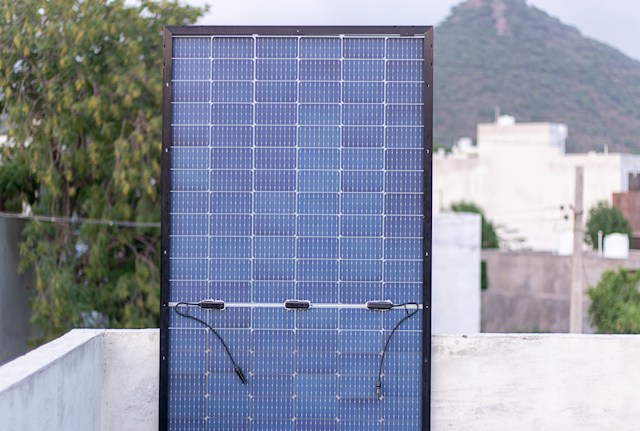
How Solar Panels Help Washington Homeowners Reduce Electricity Costs
Introduction
Electricity is essential to modern living, powering everything from household appliances and heating equipment to computers and electric vehicles.
As homeowners consider ways to manage long-term energy expenses, solar panels have become an increasingly popular option.
Residential solar energy allows households to generate electricity directly from sunlight, potentially reducing the amount of electricity they purchase from utility companies.
For Washington homeowners, understanding how solar generation affects electricity bills is an important first step toward making a well-informed investment.
How Solar Panels Reduce Electricity Purchases
Solar panels generate electricity whenever sufficient sunlight reaches their photovoltaic cells.
When household appliances consume electricity while the panels are producing power, some or all of that demand can be supplied by the solar system.
This reduces the electricity that must be purchased from the utility grid.
For example, a household using electricity during daylight hours may directly consume a portion of its solar production.
Actual savings depend on system output, household consumption, electricity rates, and utility billing arrangements.
Solar panels do not necessarily eliminate electricity bills because grid-connected customers may still pay fixed charges or purchase electricity when solar production is insufficient.
Understanding Solar Energy Production
The amount of electricity a solar system generates depends on several important factors.
These include geographic location, roof orientation, panel efficiency, shading, weather conditions, and system size.
In Washington, solar generation changes significantly throughout the year.
Long summer days often provide greater electricity production, while shorter winter days typically result in lower output.
Homeowners should evaluate estimated annual production instead of focusing exclusively on peak summer performance.
Professional energy modeling can help estimate how much electricity a proposed system may generate under local conditions.
The Importance of Household Energy Consumption
Solar savings depend not only on electricity production but also on when and how electricity is used.
Households with significant daytime electricity consumption may use more solar power directly.
Other households consume most of their electricity during evenings and early mornings, when solar panels produce little or no energy.
Understanding these consumption patterns can help determine whether additional equipment, such as battery storage, would be useful.
Energy-efficient appliances, improved insulation, and responsible electricity usage can also reduce overall household demand.
Combining solar generation with energy efficiency may improve the financial value of a renewable energy investment.
Can Battery Storage Improve Solar Savings?
Battery storage systems allow homeowners to store some electricity generated during the day for use later.
Stored energy may help power selected household loads during evenings or utility outages, depending on battery capacity and system design.
However, batteries involve additional equipment and installation costs.
Their financial value depends on electricity pricing, backup requirements, system efficiency, and the household’s energy consumption patterns.
For some homeowners, battery backup is primarily about resilience rather than maximizing financial savings.
A professional assessment can help determine whether battery storage is appropriate.
Evaluating Long-Term Financial Benefits
Solar systems are generally evaluated over many years rather than a few months.
Homeowners should consider installation costs, expected electricity production, equipment warranties, maintenance expenses, and potential changes in electricity rates.
Available incentives may affect the total investment, but programs and eligibility requirements can change.
Financial projections should use realistic assumptions rather than guaranteed savings claims.
Comparing multiple installation proposals can help homeowners understand differences in system design and projected performance.
Conclusion
Solar panels can help Washington homeowners reduce electricity purchases while supporting a cleaner energy future.
The greatest benefits come from selecting a properly sized system, understanding household consumption, and evaluating realistic long-term performance.
Sunforge helps homeowners explore customized solar solutions designed around their properties, electricity needs, and energy goals.